

Our role was to balance aesthetics, functionality, and maintenance, ensuring a consistent design language and a perfectly sequenced installation. The result: a fully executed project that proves technical precision and sustainability can go hand in hand in global hospitality.
On-site and installation challenges: 4–8 m partition wardrobes and modular headboards
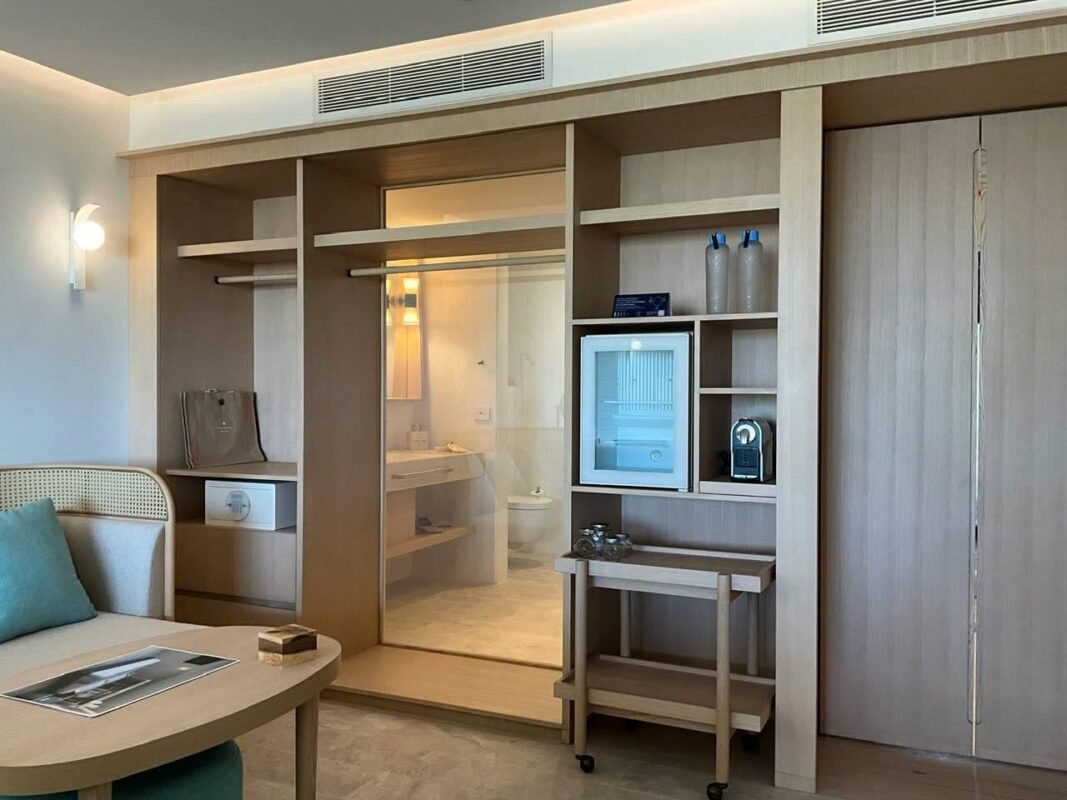
One of the main challenges of the project was the room divider wardrobes, essential elements to separate guest areas without compromising functionality or aesthetics. While the design was provided by the client and their architectural team, our role was to ensure that each module was manufactured and installed with precision and efficiency.
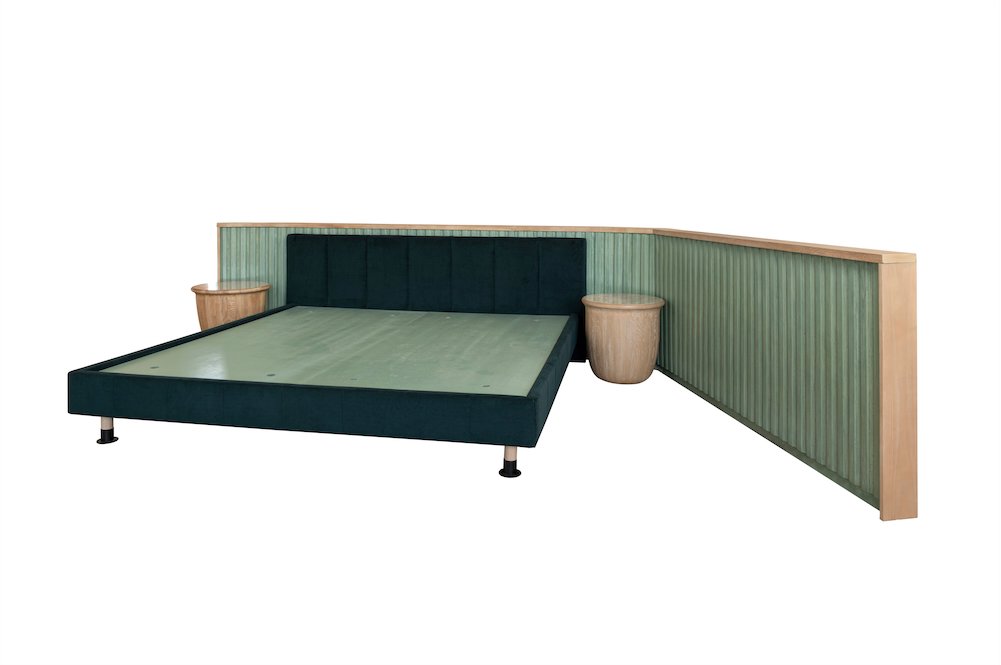
To achieve this, we implemented a system of numbered submodules, with hidden joints for easy repetition and leveling guides to streamline the process. This approach allowed the wardrobes to be assembled quickly and reliably on-site, reducing installation time and minimizing factory dependency.
The result: an efficient installation with consistent finishes, and the assurance that in case of maintenance, individual components can be replaced without dismantling the entire unit. This translates into less downtime and an optimized total cost of ownership for the hotel.
Guest Innovation: Smart Glass and Natural Light Control
In the wardrobes of room types T1/T2/T3 we integrated Smart Glass, a material that shifts from transparent to opaque at the touch of a switch. This gives guests instant privacy in the bathroom while allowing natural light to flow the rest of the time. The result: more comfort, less reliance on artificial lighting, and improved energy efficiency.
In type T4, rotating panels provide a versatile solution that combines functionality and design, ensuring silent transitions and long-lasting performance.
Every detail was developed around three principles: intuitive for the guest, robust for housekeeping, and easy to maintain by hotel engineering teams. Electrical integration was resolved with discreet access points and a clear service system, designed for quick diagnostics and component replacement.
Applied sustainability: materials, packaging, and indoor air quality
Sustainability guided design, purchasing, and installation. I eliminated EPS foam and replaced it with recycled honeycomb cardboard, using reinforced corners and reusable pieces for mockups. For high-use surfaces I chose sintered stone for durability, low porosity, and recyclability.
For headboards and bases I worked with recycled and recyclable textiles. All solid wood was FSC-certified and veneers were responsibly sourced hardwoods. I selected low-VOC/VOC-free adhesives and finishes and required emissions certificates for panels and textiles; I performed on-site TVOC measurements before handover to validate indoor air quality.
Modular design minimizes waste during replacements, and sequenced installation reduces unnecessary movements on site. These measures cut transit damage, extended service life, and improved space health.
From site backward: planning, mockup, AQL, and production in Asia and Southeast Asia
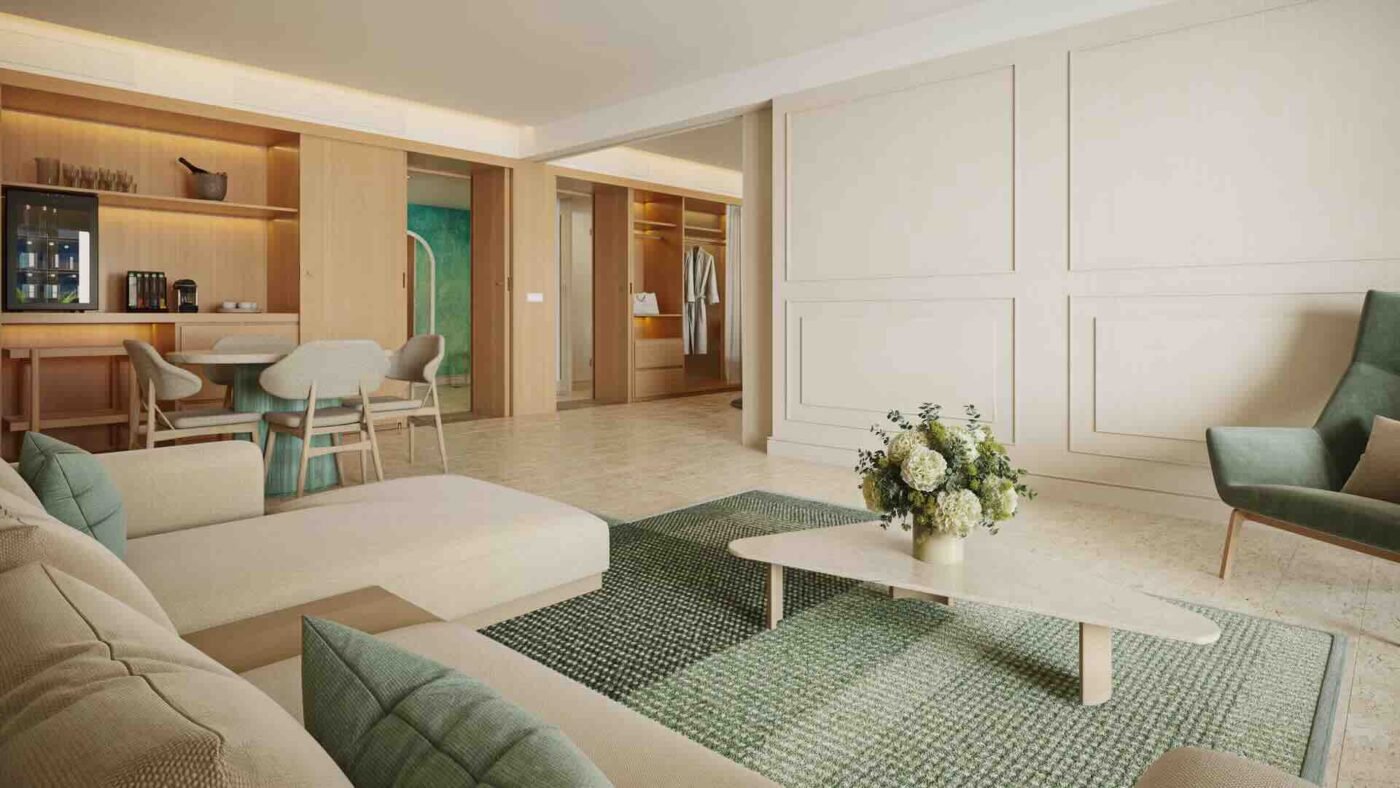
For every project we start from the site backwards: defining the critical path, the floor-by-floor schedule, and the mockup room that sets the quality standards. From there, our team translates installation needs into a detailed production plan, with manufacturing and logistics windows aligned to project milestones.
To ensure consistency, we standardize equipment catalogs by room type and prevent substitutions that could dilute the guest experience. Production takes place in certified factories across Asia and Southeast Asia, with quality controls scheduled at every stage.
On site, we coordinate unloading, cross-docking, and floor-by-floor installation sequences. Each FF&E item arrives in the exact order needed, complete with hardware kits and digital manuals to support local assembly. The result is a seamless process that reduces issues, avoids unnecessary storage, and ensures uniform execution across all rooms.
Results and learnings: timeline, total cost, and operational durability
The project was delivered on time with issues under control. The modularity of headboards and wardrobes shortens out-of-service time for spot damage. Honeycomb packaging reduced breakage and waste. Sintered stone and certified woods support the operational durability expected of a five-star property in a marine climate. Smart Glass lifted perceived value without penalizing maintenance.
Working from the site backward aligned production and logistics with the critical path, improving OTIF and lowering indirect costs. For GGH, Iberostar Joia Aruba became a lab of innovation that consolidated our end-to-end model and measurable sustainability. The key learning: when design, engineering, and site execution share one plan, the Iberostar Joia Aruba hotel project becomes a template we can replicate.
Related Post
Iberostar Joia Aruba Project: scope x y z, context, and objectives
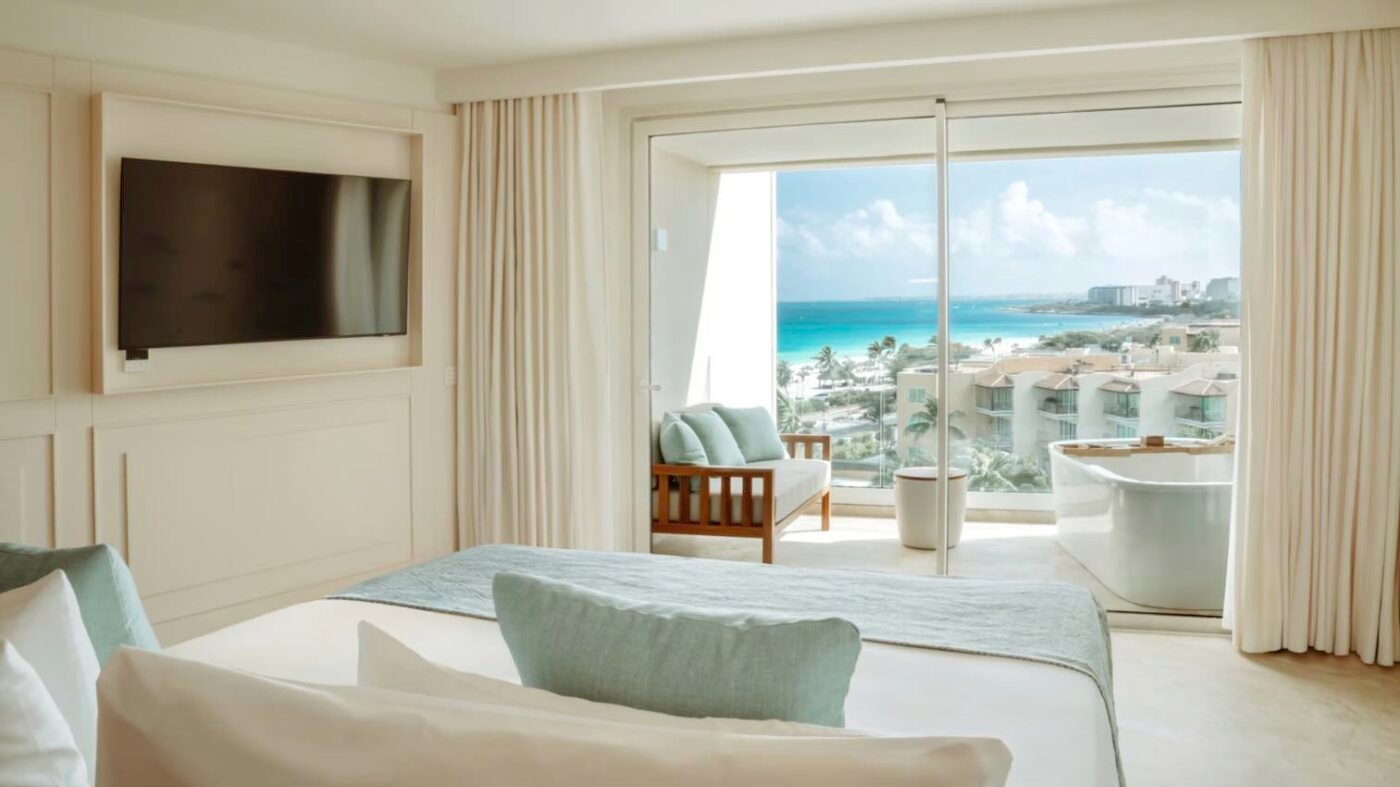
The Iberostar Joia Aruba project was a turning point for GGH. It was our first full-scope FF&E assignment for guest rooms, managing the entire process from value engineering to final on-site installation, while meeting all deadlines. Our goal was clear: to enhance the guest experience at Eagle Beach with sustainable, durable, and cost-effective contract-grade furniture. To achieve this, we applied an end-to-end approach combining modular design, certified materials, and carefully planned logistics.
Proyecto Iberostar Joia Aruba: alcance, contexto y objetivos
El proyecto Iberostar Joia Aruba marcó un antes y un después para GGH. Fue nuestro primer encargo integral de FF&E para habitaciones, gestionando todo el proceso: desde la ingeniería de valor hasta la instalación final en destino, cumpliendo con los plazos establecidos. El objetivo era claro: elevar la experiencia del huésped en Eagle Beach con un mobiliario contract-grade sostenible, duradero y rentable. Para lograrlo, aplicamos un enfoque integral que combinó diseño modular, materiales certificados y una logística cuidadosamente planificada.

Green Global Hospitality Brand: from commitment to evidence
Building a Green Global Hospitality Brand is more than color and claims. At GGH I treat sustainability as an operating system that guests can feel, owners can measure, and assets can withstand. I anchor the brand in three connected levers: contract-grade design and fabrication, a governed supply chain with OS&E, and impact measurement. I specify certified materials (FSC, GREENGUARD), engineer to EN581 and ANSI/BIFMA, and attach quality control to every lot from factory to installation.